Study reveals lower-income and rural households bear majority of U.S. data center grid upgrade costs
New Cornell research shows that major U.S. power grid upgrades driven by artificial intelligence data centers are largely funded by ordinary residents rather than the tech facilities.
 🧠AI Analysis
Photo: Hacker News Front Page
Key points
- Data centers paid only 38% of their linked infrastructure costs in 2025, leaving residents to cover the remaining 62%.
- Lowest-income households faced extra energy costs reaching up to 28% of their incomes in affected regions.
- Wholesale electricity prices jumped by up to 20% in major data center hubs like the southern San Francisco Bay area.
A study published on November 9 in Nature Energy by researchers at Cornell University has revealed that ordinary households, particularly lower-income and rural residents, are shouldering the financial burden of massive energy infrastructure upgrades driven by the artificial intelligence boom. Investigators analyzed growth across four major U.S. power grids from 2020 to 2025 and found that data centers have significantly spiked wholesale energy prices while paying only a fraction of their associated grid expansion costs.
According to the findings, data centers covered just 38% of their infrastructure expenses in 2025, amounting to $3.12 billion out of an $8.25 billion bill. The remaining 62%, totaling $5.13 billion, fell largely onto local residents. For the lowest-income households, these extra energy expenses reached up to 28% of their total incomes. Overall transmission investments in energy projects surged from $2 billion in 2020 to $34 billion in 2025, heavily fueled by the rapid construction of facilities designed to power heavy artificial intelligence workloads.
Led by Fengqi You, a professor in energy systems engineering, the research team examined records from 4,000 existing and proposed data centers, utility rate filings, and federal data across major hubs including northern Virginia, the Dallas-Fort Worth area, the Midwest, and the southern San Francisco Bay area. The data showed that data center expansion hiked wholesale electricity prices by nearly 10% or more by 2025 in the hardest-hit regions, with jumps reaching 15% in Virginia and 20% in the southern Bay Area. Conversely, regions with limited construction like New York and New England avoided clear price surges.
While highlighting the economic trade-offs—such as each gigawatt of capacity creating an average of 2,700 direct jobs and 15,000 total jobs—the authors emphasized that current cost-allocation rules fail to match who actually drives new grid demand. What to watch next: Ongoing policy debates across state governments and Congress regarding how utilities bill infrastructure expansion as data center electricity consumption is projected to reach up to 17% of the U.S. total by 2030.
Source Hacker News Front Page — news.cornell.edu/stories/2026/11/data-centers-need-power-lower-income-r… ↗
Read next
 🏢Big Tech
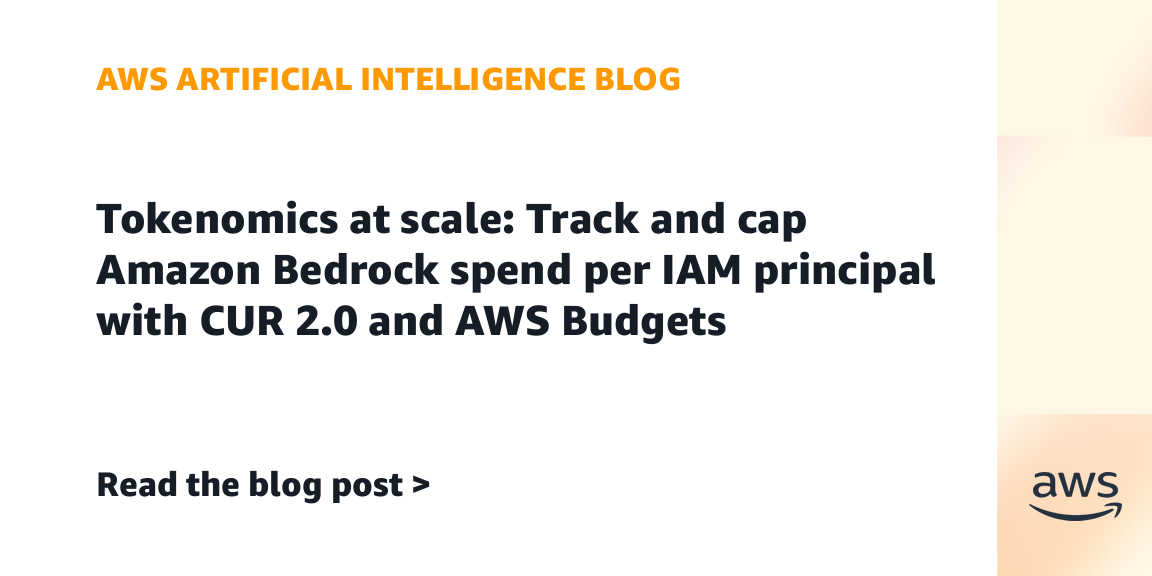
Amazon Details Native Tools for Tracking and Capping Bedrock AI Spending
Amazon Web Services has outlined a native approach for organizations to monitor and restrict generative AI expenditures per user on Amazon Bedrock without custom code.
 🧠AI Analysis
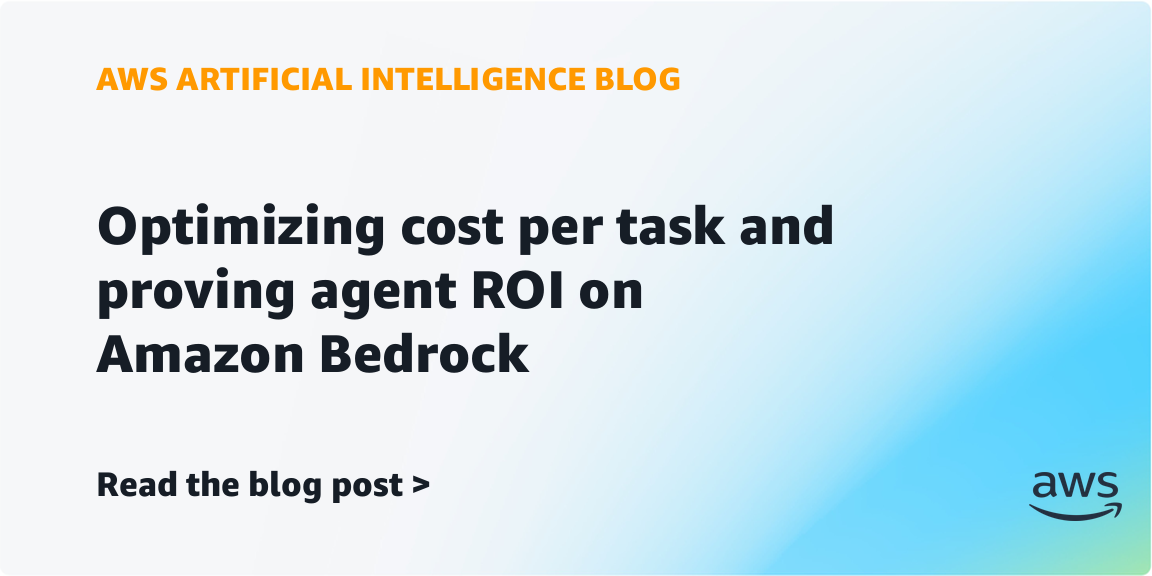
Evaluating Cost per Task and ROI for AI Agents on Amazon Bedrock
AWS outlines a framework for assessing true AI agent expenses and return on investment beyond basic token pricing on Amazon Bedrock.
 🏢Big Tech
Roku halts smart home hardware production following Fox acquisition
Streaming device maker Roku has confirmed it is winding down its smart home product line to concentrate entirely on its streaming platform.
 🧠AI Analysis
AWS Details Architecture for Self-Service LLM Gateways
Amazon has published a technical guide on deploying a centralized LLM gateway using LiteLLM and Amazon Bedrock to streamline developer access to foundation models.
 🏢Big Tech
Nvidia CEO Jensen Huang Resigns Amid Security Scandal
Nvidia CEO Jensen Huang has stepped down following the disclosure of an affair with an alleged Chinese spy. The departure creates uncertainty regarding the company’s futu…
 🧠AI Analysis
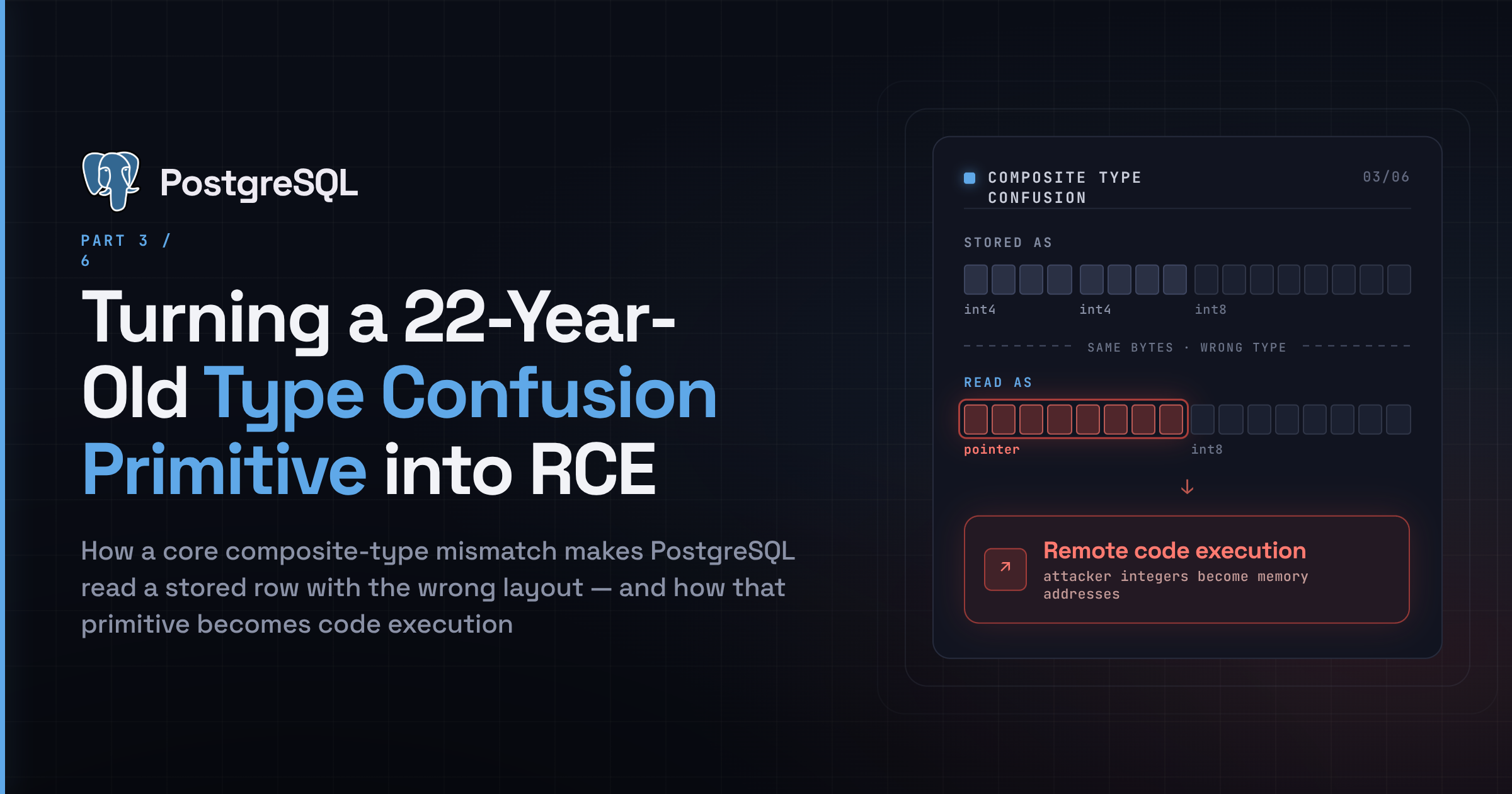
Security Researcher Uncovers 22-Year-Old PostgreSQL Core Vulnerability Using AI
A security researcher has uncovered a 22-year-old zero-day type-confusion vulnerability in PostgreSQL core, turning a data conversion inquiry into a reliable memory-corru…