AI-Powered Visual Prosthesis Breakthrough Aims to Restore Sight
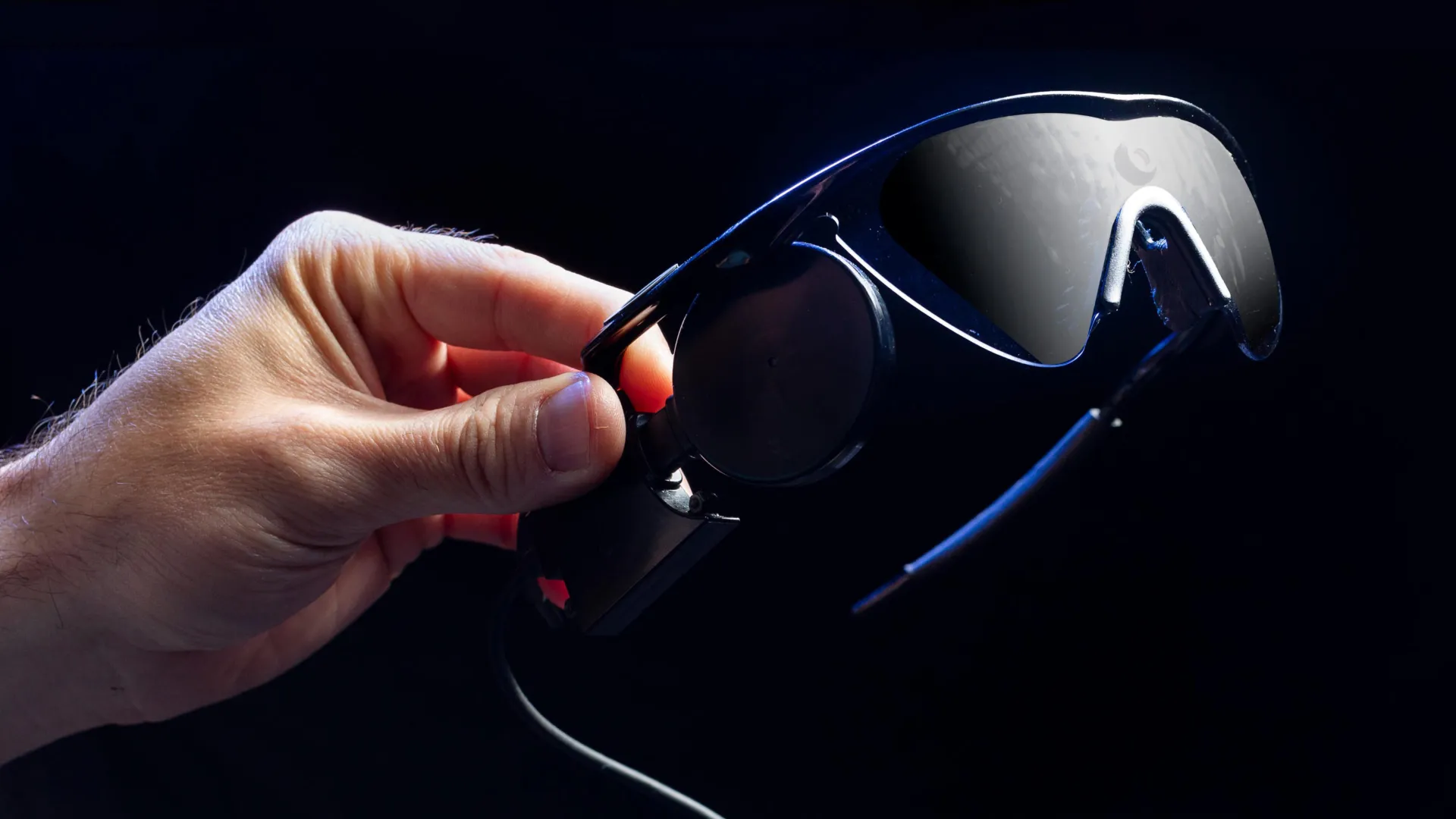
Researchers have demonstrated that deep learning can significantly improve the precision of brain implants designed to restore vision in blind individuals. The proof-of-concept study showcases how AI adapts electrical stimulation to match individual neural responses.
 🤖AI Models
Photo: ScienceDaily AI
Key points
- Researchers used a deep learning system to improve brain implant precision for the blind.
- Clinical testing took place in Spain with a patient fitted with a visual cortex electrode array.
- The AI model adapts to individual brain responses to make visual sensations more predictable.
An international team of researchers, including scientists from UC Santa Barbara, has successfully tested a deep learning system designed to overcome major hurdles in developing bionic eyes. By analyzing neural responses, the artificial intelligence model helps predict how the visual cortex reacts to electrical stimulation, allowing for more consistent visual sensations known as phosphenes.
Traditional visual prostheses often struggle to produce reliable results because identical electrical impulses do not always trigger the same perception. To address this inconsistency, the team deployed a deep neural network that factors in the brain's resting activity immediately prior to stimulation. The technology was evaluated during clinical testing in 2024 at Hospital IMED Elche in Spain, where researchers worked with a 27-year-old man who lost his sight due to a traumatic brain injury and was fitted with a 96-electrode cortical array.
Unlike devices that target the retina or optic nerve, cortical prostheses deliver electrical signals directly to the visual cortex at the back of the brain. This alternative approach offers potential hope for patients whose visual pathways are damaged from strokes, trauma, or neurodegenerative diseases, provided their visual cortex remains responsive. The research builds upon foundational computational work backed by a National Institutes of Health Director's New Innovator Award.
Building a model in the abstract is one thing. Seeing it shape an experiment with a person is something else entirely. — Michael Beyeler, UC Santa Barbara
What to watch next: Future trials will test whether these adaptive AI models can maintain long-term reliability and help patients interpret more complex visual shapes and patterns.
Source ScienceDaily AI — sciencedaily.com/releases/2026/11/261110042553.htm ↗
Read next
 🧠AI Analysis
Pedestal AI Secures Seed Funding to Automate Logistics With Intelligent Agents
Pedestal AI has launched publicly with $4.7 million in seed backing to deploy agentic artificial intelligence aimed at streamlining logistics and supply chain operations.
 🏢Big Tech
United Launch Alliance Investigates Vulcan Rocket Failure
United Launch Alliance is investigating a mission failure of its Vulcan rocket, which suffered from low booster performance shortly after liftoff. The incident raises que…
 🌐Work & Society
US Southwest Hydropower Output Hits Record Lows Amid Persistent Drought
Hydropower generation in the US Southwest dropped 28% below the 10-year average this summer as record-low water levels in the Colorado River Basin threaten regional energ…
 🏢Big Tech
YouTube Updates View Metrics to Include TV Co-Viewing Estimates
YouTube is incorporating estimated co-viewing data into its public view counts to better reflect group consumption on television sets.
 ⚖️Regulation & Policy
OpenAI Partners with Chilean Ministry to Advance Public Sector AI
OpenAI has signed a non-binding agreement with Chile's science ministry to integrate artificial intelligence into public administration and support local startups.
 🌐Work & Society
Ambience Healthcare Expands Clinical AI Suite for Hospital Operations
Ambience Healthcare has launched new AI tools designed to assist hospital staff with patient rounding and discharge planning, aiming to improve both clinical efficiency a…