Celonis CEO Urges Europe to Build AI Champions to Close US Economic Gap
Alexander Rinke, co-founder of Celonis, advocates for European AI sovereignty and "process intelligence" to ensure the region benefits from the next wave of technological growth.
 🚀Startups & Funding
Photo: thenextweb.com
Key points
- Celonis CEO Alexander Rinke argues that Europe needs its own AI leaders to close the GDP gap with the US.
- Sovereign AI is defined as owning model weights and keeping data within a company's private environment.
- Celonis recently acquired Ikigai Labs to enhance its process intelligence with specialized time-series and simulation models.
The Push for European AI Sovereignty
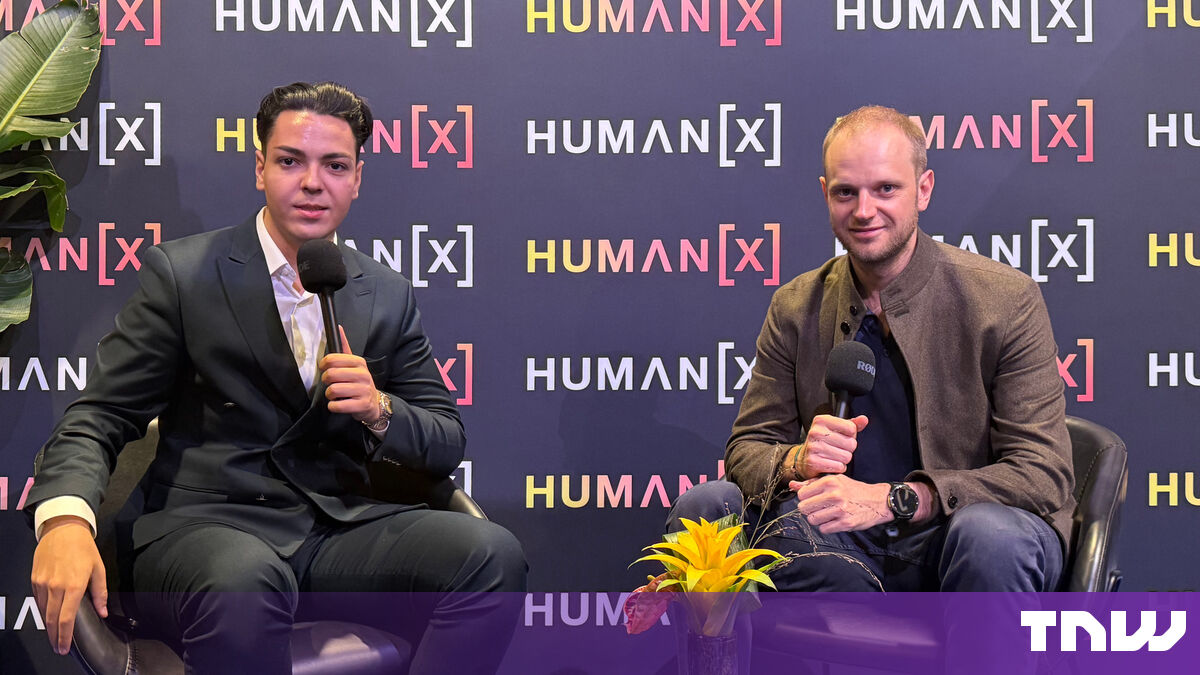
Alexander Rinke, the co-founder and co-CEO of Celonis, has called for the development of European "AI champions" to prevent the region from falling further behind the United States economically. Speaking in Amsterdam, Rinke noted that Europe’s GDP has significantly diverged from the US over the last 30 years. He argued that local control over the AI stack is necessary for companies to protect their intellectual property and participate in the growing AI economy.
Rinke defined sovereign AI as an organization's ability to own its model weights and keep data within its own environment. According to Rinke, many businesses are hesitant to share proprietary data with external models for training. To address this, Celonis assists customers in tuning open-source models for specific business functions, claiming these specialized models can outperform general frontier models in targeted tasks.
Process Intelligence and Strategic Growth
The Munich and New York-based company, which employs approximately 3,500 people, focuses on "process intelligence." This technology acts as an "x-ray machine" for business data, mapping how work is actually performed across different systems. Celonis recently expanded its capabilities by acquiring Ikigai Labs, an MIT spin-off that builds specialized models for time-series data and simulations, which can be integrated with large language models for supply chain forecasting.
Addressing the current AI investment climate, Rinke cautioned startups against scaling prematurely. He emphasized that product-market fit must be proven through repeatable value and customer retention before an organization attempts to scale.
"You shouldn’t build the company to raise capital. You should build the company for customers,"Rinke stated, reflecting on his experience bootstrapping Celonis for five years before seeking venture capital.
What to watch next: The integration of Ikigai Labs' predictive models into the Celonis "Context Model" to see if it drives adoption in the insurance and logistics industries.
Source thenextweb.com — thenextweb.com/news/alexander-rinke-celonis-sovereign-ai-tnw-podcast ↗
Read next
 🧠AI Analysis
Pedestal AI Secures Seed Funding to Automate Logistics With Intelligent Agents
Pedestal AI has launched publicly with $4.7 million in seed backing to deploy agentic artificial intelligence aimed at streamlining logistics and supply chain operations.
 🏢Big Tech
United Launch Alliance Investigates Vulcan Rocket Failure
United Launch Alliance is investigating a mission failure of its Vulcan rocket, which suffered from low booster performance shortly after liftoff. The incident raises que…
 🌐Work & Society
US Southwest Hydropower Output Hits Record Lows Amid Persistent Drought
Hydropower generation in the US Southwest dropped 28% below the 10-year average this summer as record-low water levels in the Colorado River Basin threaten regional energ…
 🏢Big Tech
YouTube Updates View Metrics to Include TV Co-Viewing Estimates
YouTube is incorporating estimated co-viewing data into its public view counts to better reflect group consumption on television sets.
 🏢Big Tech
Apple Services Experience Widespread Outage
Apple users are reporting significant disruptions across iCloud, the App Store, and other core services, despite initial discrepancies in the company's status reporting.
 ⚖️Regulation & Policy
OpenAI Partners with Chilean Ministry to Advance Public Sector AI
OpenAI has signed a non-binding agreement with Chile's science ministry to integrate artificial intelligence into public administration and support local startups.