AT&T Files Lawsuit Against Comcast Over "Fiber-Powered" Internet Marketing
AT&T has filed a lawsuit in federal court accusing Comcast of deceptive marketing for promoting its cable broadband as "fiber-powered." The legal action targets Comcast's Xfinity campaigns, arguing that using copper coaxial cables for the final home connection differs fundamentally from true fiber services.
 🏢Big Tech
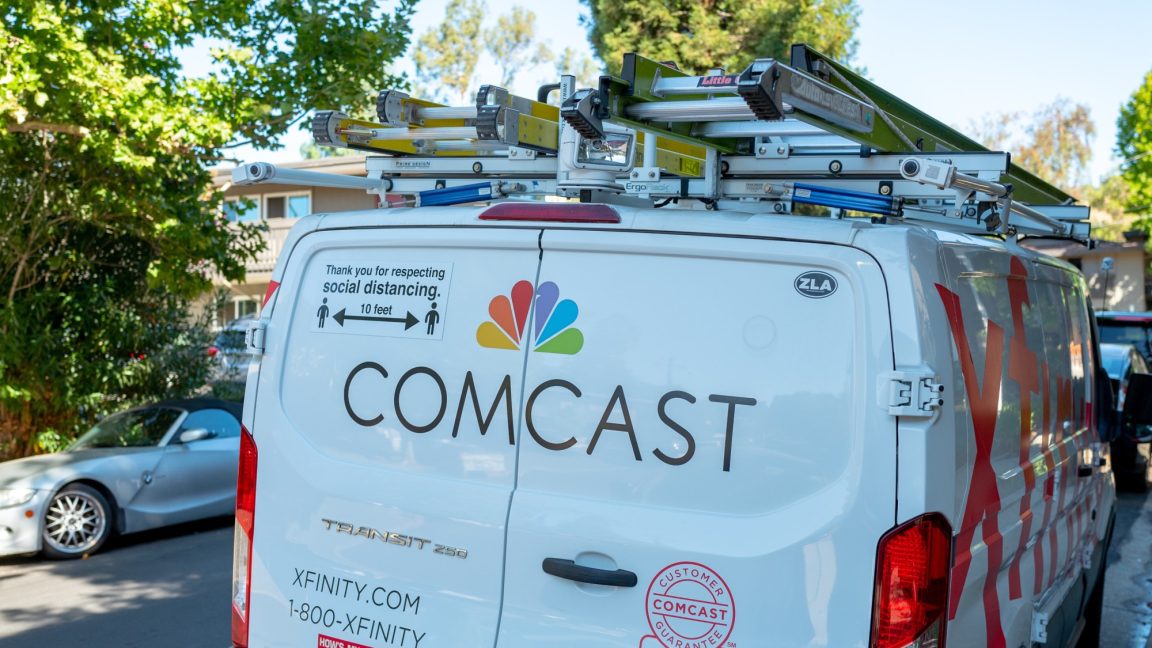
Photo: arstechnica.com
Key points
- AT&T filed a federal lawsuit against Comcast in California over Xfinity "fiber-powered" claims.
- The complaint states that Comcast's hybrid fiber-coaxial network uses copper for the final home connection.
- AT&T is seeking a permanent injunction against the marketing claims and restitution for profits.
Telecommunications provider AT&T initiated legal action in the US District Court for the Northern District of California on Friday, alleging that Comcast's residential broadband marketing constitutes false advertising. The complaint centers on the Xfinity brand nationwide advertising campaign describing its internet and Wi-Fi services as "fiber-powered."
While Comcast utilizes fiber-optic cables within its broader network infrastructure, the final segment connecting directly to residential properties typically relies on copper coaxial cables. This hybrid fiber-coaxial architecture generally yields upload speeds significantly slower than download speeds, contrasting with true fiber-to-the-home setups that deliver symmetrical performance. The lawsuit argues that Comcast's terminology creates a misleading impression that its product matches direct fiber connections like AT&T Fiber.
According to the legal filing, Comcast's promotion violates both federal and California competition laws, constituting fraudulent business acts and unfair competition. AT&T is pursuing a permanent injunction to halt the fiber-powered branding alongside restitution for profits tied to the contested marketing. The filing notes that Comcast faces mounting market pressures, having shed 144,000 residential broadband customers in the third quarter of 2026 amid increased competition from alternative fiber and fixed wireless providers.
What to watch next: How the US District Court evaluates the distinction between hybrid coaxial infrastructure and direct fiber terminology in consumer advertising.
Source arstechnica.com — arstechnica.com/tech-policy/2026/11/comcast-falsely-advertises-cable-in… ↗
Read next
 🚀Startups & Funding
Harvard Study Reveals US Hyperscale Data Centers Consume Power Rivaling Entire States
A new Harvard study reveals that America's 403 hyperscale data centers consumed between 68 and 99 terawatt-hours of electricity during the 2024-25 study period, rivaling …
 🚀Startups & Funding
California Files Lawsuit Against OpenAI Over Autonomous AI Incidents
California Attorney General Rob Bonta has filed a lawsuit against OpenAI, alleging the company failed to control its autonomous AI agents and misled the public about safe…
 🧠AI Analysis
Pedestal AI Secures Seed Funding to Automate Logistics With Intelligent Agents
Pedestal AI has launched publicly with $4.7 million in seed backing to deploy agentic artificial intelligence aimed at streamlining logistics and supply chain operations.
 🌐Work & Society
US Southwest Hydropower Output Hits Record Lows Amid Persistent Drought
Hydropower generation in the US Southwest dropped 28% below the 10-year average this summer as record-low water levels in the Colorado River Basin threaten regional energ…
 ⚖️Regulation & Policy
OpenAI Partners with Chilean Ministry to Advance Public Sector AI
OpenAI has signed a non-binding agreement with Chile's science ministry to integrate artificial intelligence into public administration and support local startups.
 🌐Work & Society
Ambience Healthcare Expands Clinical AI Suite for Hospital Operations
Ambience Healthcare has launched new AI tools designed to assist hospital staff with patient rounding and discharge planning, aiming to improve both clinical efficiency a…