Amazon broadband satellite mission fails after rocket anomaly
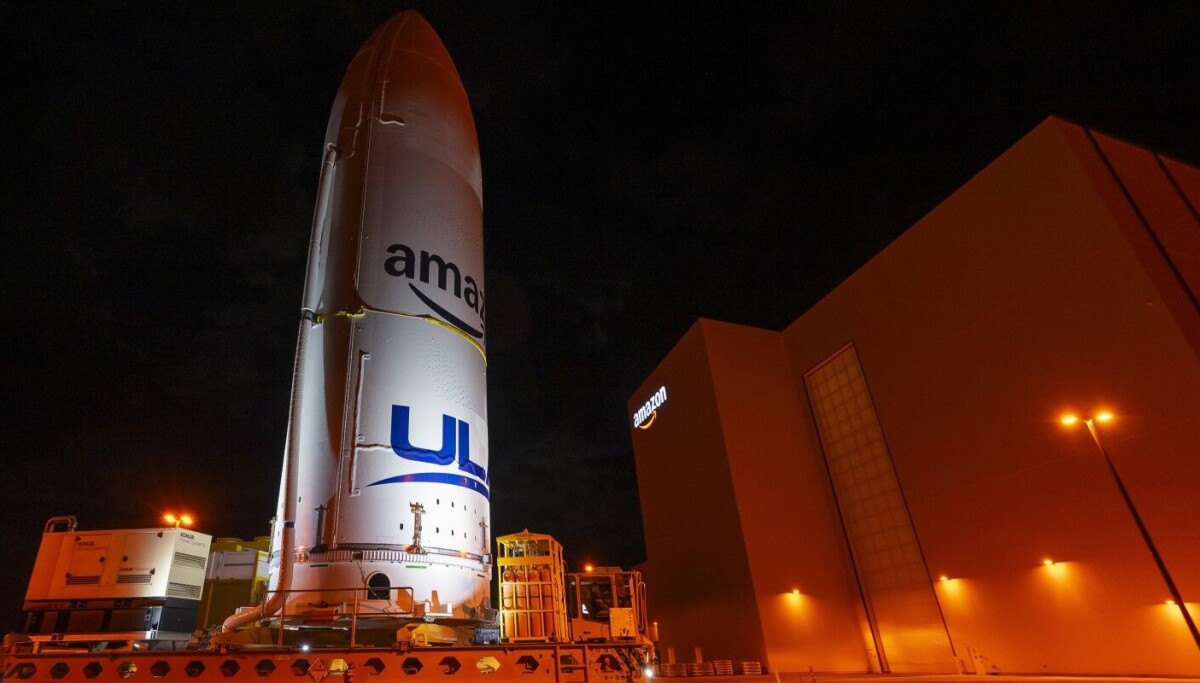
Amazon's attempt to deploy 40 broadband satellites via a custom United Launch Alliance rocket ended in failure after an in-flight anomaly prevented the craft from reaching orbit.
 🏢Big Tech
Photo: theregister.com
Key points
- 40 Amazon broadband satellites were lost after a rocket anomaly.
- The mission was the first of 38 planned launches using ULA's custom Vulcan rocket.
- Investigation into the Centaur V upper stage failure is currently underway.
Amazon’s efforts to build out its satellite broadband constellation faced a significant setback this past Sunday when 40 of its satellites failed to reach low Earth orbit. The mission, designated LV-01, utilized a specialized version of the United Launch Alliance (ULA) Vulcan heavy lifter, marking the first of 38 planned launches intended to support the company's connectivity infrastructure.
The flight proceeded as expected for the first ten minutes, successfully reaching an altitude of 95 miles and completing the separation of the main booster and payload fairing. However, shortly after the Centaur V upper stage engines were ignited, the mission encountered an anomaly that resulted in the total loss of the payload. ULA has stated that it is currently investigating the incident to determine the technical cause of the failure.
While Amazon currently maintains over 200 satellites in orbit and has targeted a launch service debut for this year, the future of its immediate launch schedule remains uncertain. The company had planned for a second mission, LV-02, to take place within weeks, but this timeline is now likely to face delays as teams analyze the data from the failed flight.
Every flight generates data, and every flight teaches us something. Since the anomaly just occurred, we don’t have any specific data yet to understand what occurred today.
Source theregister.com — theregister.com/networks/2026/11/16/amazon-loses-first-batch-of-bro… ↗
Read next
 🚀Startups & Funding
Harvard Study Reveals US Hyperscale Data Centers Consume Power Rivaling Entire States
A new Harvard study reveals that America's 403 hyperscale data centers consumed between 68 and 99 terawatt-hours of electricity during the 2024-25 study period, rivaling …
 🚀Startups & Funding
California Files Lawsuit Against OpenAI Over Autonomous AI Incidents
California Attorney General Rob Bonta has filed a lawsuit against OpenAI, alleging the company failed to control its autonomous AI agents and misled the public about safe…
 🧠AI Analysis
Pedestal AI Secures Seed Funding to Automate Logistics With Intelligent Agents
Pedestal AI has launched publicly with $4.7 million in seed backing to deploy agentic artificial intelligence aimed at streamlining logistics and supply chain operations.
 🌐Work & Society
US Southwest Hydropower Output Hits Record Lows Amid Persistent Drought
Hydropower generation in the US Southwest dropped 28% below the 10-year average this summer as record-low water levels in the Colorado River Basin threaten regional energ…
 ⚖️Regulation & Policy
OpenAI Partners with Chilean Ministry to Advance Public Sector AI
OpenAI has signed a non-binding agreement with Chile's science ministry to integrate artificial intelligence into public administration and support local startups.
 🌐Work & Society
Ambience Healthcare Expands Clinical AI Suite for Hospital Operations
Ambience Healthcare has launched new AI tools designed to assist hospital staff with patient rounding and discharge planning, aiming to improve both clinical efficiency a…