PwC Executive Outlines Shift from AI Efficiency to Revenue Growth
PwC leaders note that corporate interest in artificial intelligence has moved beyond basic productivity gains toward creating new revenue streams and transforming business models.
 🧠AI Analysis
Photo: The Information
Key points
- Corporate AI strategy is shifting from internal productivity to revenue growth.
- Proprietary data is emerging as a core competitive advantage for enterprises.
- Security and tokenomics are driving a shift toward fit-for-purpose model strategies.
Corporate discussions surrounding artificial intelligence are undergoing a fundamental shift. Rather than focusing entirely on internal efficiency and productivity, business leaders are increasingly exploring how to leverage AI to unlock fresh revenue streams and develop new products. According to Rima Safari, the U.S. data, analytics, and AI practice leader at PwC US, companies are attempting to transition from basic experimentation to concrete business outcomes.
Safari highlighted two primary avenues for AI-driven growth. The first involves analyzing existing operational data to unearth insights that can be packaged into external offerings. For instance, she noted that an aerospace and defense client utilized AI to evaluate over three decades of maintenance records, transforming those findings into an inventory management product for other airlines. The second opportunity centers on utilizing proprietary information to deliver real-time insights for critical decisions, acting much like a navigation system that adapts to live conditions.
As organizations increasingly access comparable frontier models, proprietary data is becoming a primary competitive differentiator, making robust data protection essential. However, large enterprises often struggle with this transformation because they treat AI merely as a tool for automating legacy processes rather than rethinking operations from scratch. Furthermore, security concerns are prompting a change in philosophy, with risk management now moving from an afterthought to a foundational architectural requirement for autonomous AI agents.
Executives are also growing more cost-conscious, moving away from tracking simple usage metrics toward a fit-for-purpose strategy. Companies now combine high-end frontier models with open-source alternatives to better manage computational expenses.
What to watch next: How enterprises balance proprietary data security with multi-model deployment strategies.
Source The Information — theinformation.com/articles/pwc-ai-can-help-drive-revenue ↗
Read next
 🏢Big Tech
United Launch Alliance Investigates Vulcan Rocket Failure
United Launch Alliance is investigating a mission failure of its Vulcan rocket, which suffered from low booster performance shortly after liftoff. The incident raises que…
 🌐Work & Society
US Southwest Hydropower Output Hits Record Lows Amid Persistent Drought
Hydropower generation in the US Southwest dropped 28% below the 10-year average this summer as record-low water levels in the Colorado River Basin threaten regional energ…
 🏢Big Tech
YouTube Updates View Metrics to Include TV Co-Viewing Estimates
YouTube is incorporating estimated co-viewing data into its public view counts to better reflect group consumption on television sets.
 🏢Big Tech
Apple Services Experience Widespread Outage
Apple users are reporting significant disruptions across iCloud, the App Store, and other core services, despite initial discrepancies in the company's status reporting.
 ⚖️Regulation & Policy
OpenAI Partners with Chilean Ministry to Advance Public Sector AI
OpenAI has signed a non-binding agreement with Chile's science ministry to integrate artificial intelligence into public administration and support local startups.
 🌐Work & Society
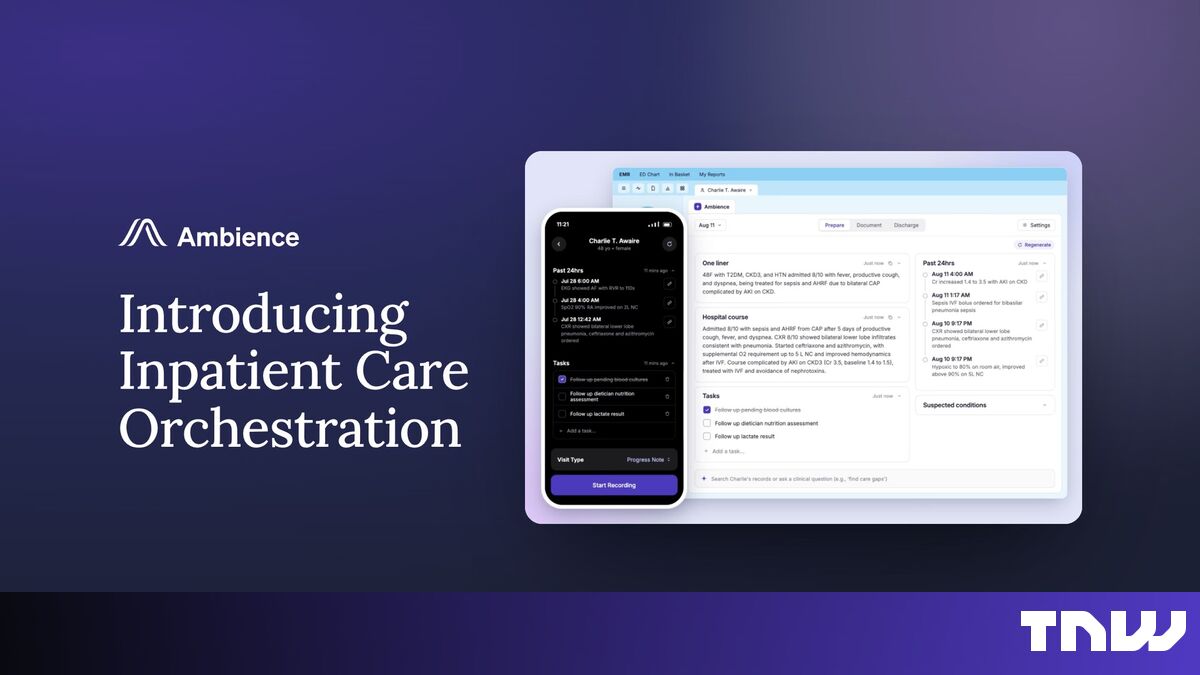
Ambience Healthcare Expands Clinical AI Suite for Hospital Operations
Ambience Healthcare has launched new AI tools designed to assist hospital staff with patient rounding and discharge planning, aiming to improve both clinical efficiency a…