AI Agents Assist in Identification of Unmapped Maya Site
An individual utilized a swarm of AI agents to analyze public NASA lidar data, successfully identifying an unmapped Maya archaeological site in Mexico.
 🤖AI Models
Photo: Hacker News AI
Key points
- AI agents scanned 1,200 square kilometers of lidar data to identify geometric structures.
- The agents assisted in the entire workflow, from data analysis and report drafting to navigating government contact protocols.
- The identified site was later confirmed to be a known location in academic literature, though it was missing from official government registries.
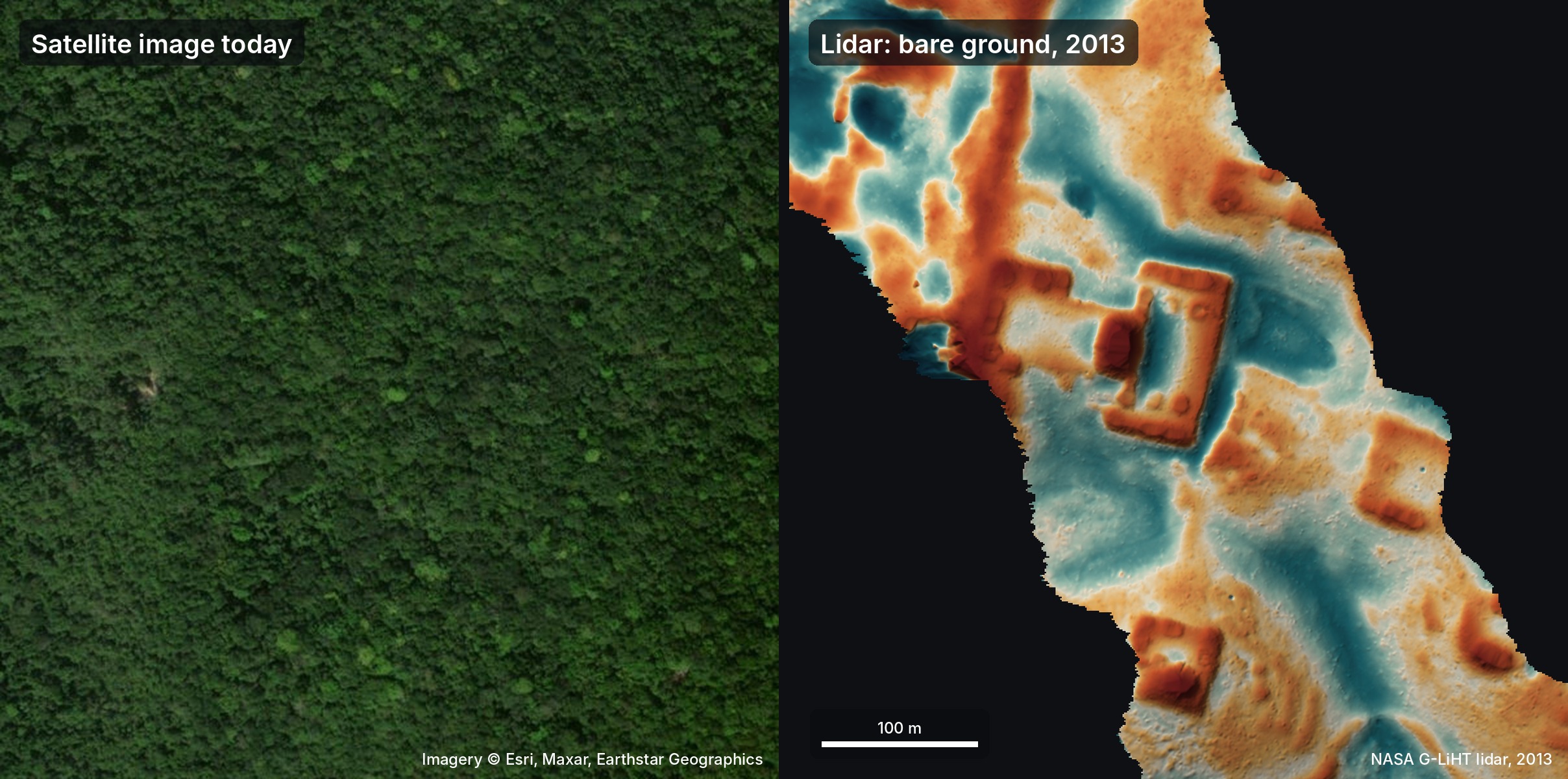
A researcher recently demonstrated the potential for AI agents to accelerate archaeological discovery by processing large-scale lidar datasets. By tasking a team of 48 agents with scanning 1,200 square kilometers of Mexican jungle, the project identified distinct geometric shapes—including a plaza, a pyramid, and a potential water reservoir—that were not present in the official records of Mexico's National Institute of Anthropology and History (INAH).
The process involved converting lidar point clouds into images, which the agents reviewed to filter out natural terrain from man-made structures. The researcher relied on the agents to navigate the bureaucratic reporting process, including drafting and translating a formal report into Spanish. While the site was later confirmed to have been documented in academic literature, it remained absent from official government registries, highlighting a gap between academic research and institutional mapping.
Assessment: This experiment illustrates how AI agents can act as force multipliers for human researchers by automating the tedious analysis of massive geospatial datasets. While the agents successfully identified features of a Classic period Maya civic center, the incident underscores the necessity of human verification and cross-referencing against existing academic archives to prevent redundant discovery claims.
What to watch next: The integration of AI-driven pattern recognition into public geospatial databases to assist heritage conservation efforts.
Source Hacker News AI — pietromiotti.com/latest/maya-site ↗
Read next
 ⚖️Regulation & Policy
Nvidia CEO Jensen Huang Steps Down, CFO Colette Kress Appointed Interim Chief
Jensen Huang has immediately resigned as President, CEO, and board member of Nvidia, with CFO Colette Kress stepping in as interim chief executive while the board searche…
 🔌Chips & Hardware
Nvidia Chief Executive Jensen Huang Faces Sudden Scrutiny Amid Market Anxieties
Nvidia CEO Jensen Huang has experienced a sudden drop in standing, sparking deep anxiety across Washington and Silicon Valley over the stability of the broader U.S. stock…
 🌐Work & Society
South Korean AI and Deep Tech Startups Target US Market Expansion
Nine startups competed in Seoul for a chance to join a major international pitch competition, highlighting innovations in healthcare AI and energy-efficient chips.
 🏢Big Tech
Palantir CEO Alex Karp Defends Defense Tech Firm as 'Progressive' and Deterrent to War
Palantir Chief Executive Alex Karp has repeatedly characterized his software company and political views as progressive, defending military AI contracts as tools to preve…
 🏢Big Tech
Flight Attendants Secure Privacy Safeguards in Google Data Purchase from Bankrupt Spirit Airlines
A union representing flight attendants has reached an agreement ensuring worker data is de-identified before Google acquires it through Spirit Airlines' liquidation, sett…
IBM Unveils Quantum Nighthawk r3 Processor Aimed at 10,000 Operations
IBM has announced its upcoming Nighthawk r3 quantum processor alongside performance data for the currently available r2 chip.