ETH Zurich Researchers Build Quantum Memory Using Microscopic Mechanical Vibrations
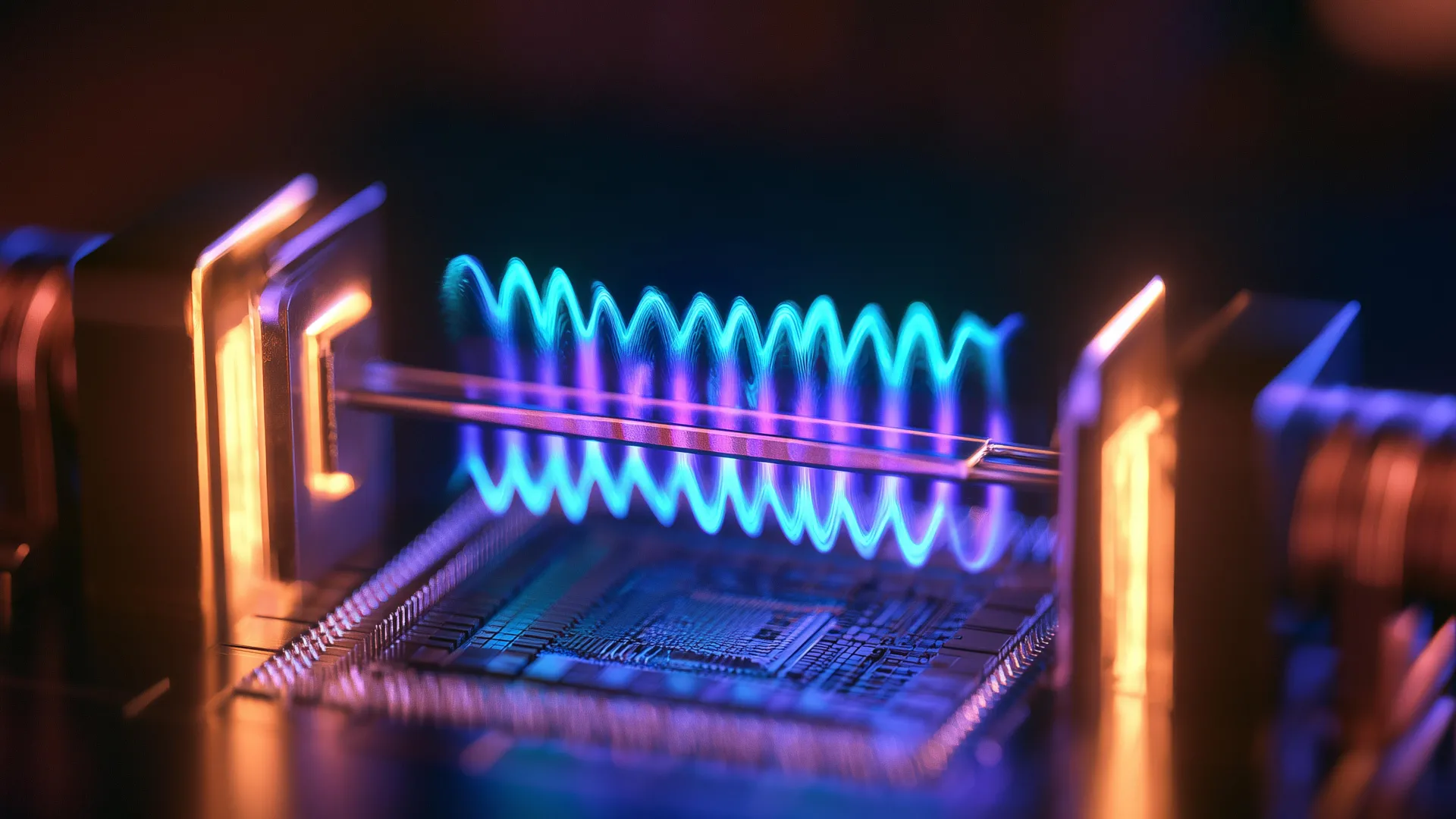
Scientists at ETH Zurich have developed a new architecture for quantum computers that uses microscopic mechanical vibrations as working memory, mirroring the design of traditional computers.
 🤖AI Models
Photo: ScienceDaily AI
Key points
- ETH Zurich team uses mechanical vibrations for quantum memory
- System separates processing qubit from storage, mimicking traditional CPU and RAM
- Mechanical resonators offer space savings and longer data retention times
Researchers led by physicist Yiwen Chu at ETH Zurich have unveiled a novel approach to quantum computer design that draws inspiration from standard digital computers. By separating information processing from storage, the team established a system where microscopic mechanical vibrations act as a flexible working memory inside a quantum chip.
In conventional electronic machines, a central processing unit handles computations while random access memory keeps data ready. The team replicated this division by using a superconducting qubit as the processor alongside a distinct quantum memory unit. Instead of relying on conventional electromagnetic storage, this new memory preserves quantum information through tiny vibrational patterns comparable to the strings of a musical instrument operating far beyond human hearing.
Traditional electromagnetic storage systems often take up substantial space, creating hurdles for scaling up experimental hardware into larger commercial devices. In contrast, mechanical resonators provide a more compact footprint and can maintain quantum states for extended durations before degradation occurs. This extended retention time and multi-pattern storage capacity could help engineers overcome major hurdles in managing fragile quantum states.
The interaction between the quantum processor and the quantum memory provides a crucial foundation with a view to establishing quantum computers as a powerful and reliable way to perform computations that are not feasible with conventional computers, noted Yiwen Chu.
What to watch next: Further engineering trials to test whether mechanical resonators can be successfully integrated into larger, scalable quantum computer architectures.
Source ScienceDaily AI — sciencedaily.com/releases/2026/11/261109205416.htm ↗
Read next
 🏢Big Tech
Palantir CEO Alex Karp Defends Defense Tech Firm as 'Progressive' and Deterrent to War
Palantir Chief Executive Alex Karp has repeatedly characterized his software company and political views as progressive, defending military AI contracts as tools to preve…
 🏢Big Tech
Flight Attendants Secure Privacy Safeguards in Google Data Purchase from Bankrupt Spirit Airlines
A union representing flight attendants has reached an agreement ensuring worker data is de-identified before Google acquires it through Spirit Airlines' liquidation, sett…
IBM Unveils Quantum Nighthawk r3 Processor Aimed at 10,000 Operations
IBM has announced its upcoming Nighthawk r3 quantum processor alongside performance data for the currently available r2 chip.
Darling Project Adopts AI Contributions Policy and Adds ARM64 Support
The open-source macOS-on-Linux compatibility layer Darling has updated its contribution rules to officially permit AI-assisted code, alongside introducing initial ARM64 a…
 🏢Big Tech
Nvidia Faces Uncertainty as CEO Jensen Huang's Future Hangs in the Balance
Nvidia CEO Jensen Huang faces plunging survival odds on prediction markets following explosive reports regarding personal conduct. As speculation grows over potential lea…