Evaluating AI-Generated Mathematical Proofs in Lean
Experts emphasize that AI-generated mathematical proofs verified in Lean require rigorous human testing before correctness can be guaranteed.
 🤖AI Models
Photo: Hacker News Front Page
Key points
- OpenAI's recent theorem dump included 722 papers, with roughly 45% featuring Lean code.
- Experts warn that AI-generated Lean code requires specific human-led tests to confirm correctness.
- A key challenge involves verifying that coded theorem statements accurately match the original mathematical problems without exploiting logical loopholes.
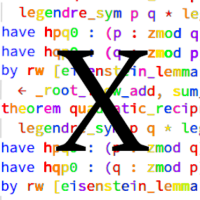
Recent releases of automated mathematical proofs, such as OpenAI's theorem dump comprising 722 mathematics papers where roughly 45% included Lean code, have sparked intense debate over machine-verified correctness. While Lean acts as a formal proof assistant, security and validation experts warn that accepting these repositories at face value is premature. Crucially, systematic testing of AI-generated Lean code has yet to be widely performed across many of these recent academic outputs.
A primary challenge in auditing machine-generated code lies in distinguishing between a theorem's statement and its actual proof. As analysts point out, a repository can compile a syntactically valid code statement that mathematically misrepresents the intended problem due to edge cases or flawed definitions. Furthermore, complex formalizations often rely on extensive helper libraries—sometimes spanning tens or hundreds of thousands of lines of code—that sit outside established, human-vetted repositories like Mathlib.
For instance, recent large-scale formalizations require navigating vast imports where critical definitions may lack rigorous human verification. Consequently, experts argue that establishing trust in AI mathematical outputs requires answering specific structural questions about the code, ensuring that automated systems have not merely exploited loopholes to satisfy verification checks without proving the intended mathematical concept.
What to watch next: Watch for the development of standardized auditing frameworks and community-led reviews for machine-generated theorem repositories.
Source Hacker News Front Page — xenaproject.wordpress.com/2026/11/12/and-the-proof-is-checked-in-lean/ ↗
Read next
 🌐Work & Society
Ambience Healthcare Expands Clinical AI Suite for Hospital Operations
Ambience Healthcare has launched new AI tools designed to assist hospital staff with patient rounding and discharge planning, aiming to improve both clinical efficiency a…
 🧠AI Analysis
AI Models Vulnerable to Manipulation in Simulated Warfare Scenarios, Research Shows
New research reveals that leading AI models from firms like OpenAI and Anthropic can be manipulated into identifying civilian targets when prompted with game scenarios.
 ⚖️Regulation & Policy
AWS Highlights Enterprise Governance and AI Workspace Quick Ahead of re:Invent 2026
Amazon Web Services is spotlighting its workplace AI platform, AWS Quick, ahead of its upcoming re:Invent 2026 conference, emphasizing secure deployment across major ente…
 🏢Big Tech
LoanPro Integrates Amazon Bedrock to Automate Loan Servicing Workflows
LoanPro has deployed a multi-agent AI assistant using Amazon Bedrock and Anthropic's Claude models to help lenders manage borrower accounts, resulting in a 15% reduction …
 🏢Big Tech
Google Brings Wallet App to iOS Users Across the United States
Google has expanded the availability of its Wallet application to iOS devices in the U.S., allowing Apple users to store digital passes, tickets, and receipts.
 ⚖️Regulation & Policy
Microsoft Reveals Cause of Global Outlook Outage
A latent software bug caused a nearly 24-hour global outage of Microsoft’s Exchange Online services, affecting millions of users worldwide.