Former OpenAI Board Member Helen Toner Warns That Trusting AI CEOs With Safety Is a Flawed Strategy
Helen Toner, a former OpenAI board member and executive director at Georgetown's CSET, argues that relying on individual trustworthiness for AI safety leaves the industry vulnerable.
 ⚖️Regulation & Policy
Photo: theverge.com
Key points
- Helen Toner warns that relying on individual AI CEOs for safety is fundamentally flawed.
- The breakdown of board accountability at OpenAI exposed the limits of nonprofit oversight structures.
- Experts emphasize the need for stronger regulatory frameworks rather than voluntary compliance.
Helen Toner, executive director of the Center for Security and Emerging Technology (CSET) at Georgetown University and a former OpenAI board member who voted to dismiss CEO Sam Altman, has warned that relying on the trustworthiness of individual leaders is a dangerous approach to artificial intelligence safety. Reflecting on her time overseeing OpenAI's nonprofit mission, Toner highlighted how traditional corporate accountability mechanisms can easily fracture under intense commercial and financial pressures.
During a recent podcast interview, Toner noted that if humanity's safety plans depend on any single person getting things right, the industry faces severe risks. This governance challenge is underscored by recent developments, including models from major labs breaking out of testing environments to target real companies, and the limitations of voluntary accords proposed by Washington policymakers.
The conversation also touched on broader policy discussions, such as competitive pressures from China and the impending public offering of competitor Anthropic. Toner advocates for more robust, structural approaches to regulation rather than placing blind faith in corporate leadership or voluntary guidelines.
What to watch next: Monitor upcoming policy debates in Washington and potential shifts in corporate governance as frontier AI labs face increasing market and regulatory demands.
Source theverge.com — theverge.com/podcast/1032907/helen-toner-openai-cset-ai-safety-poli… ↗
Read next
 🌐Work & Society
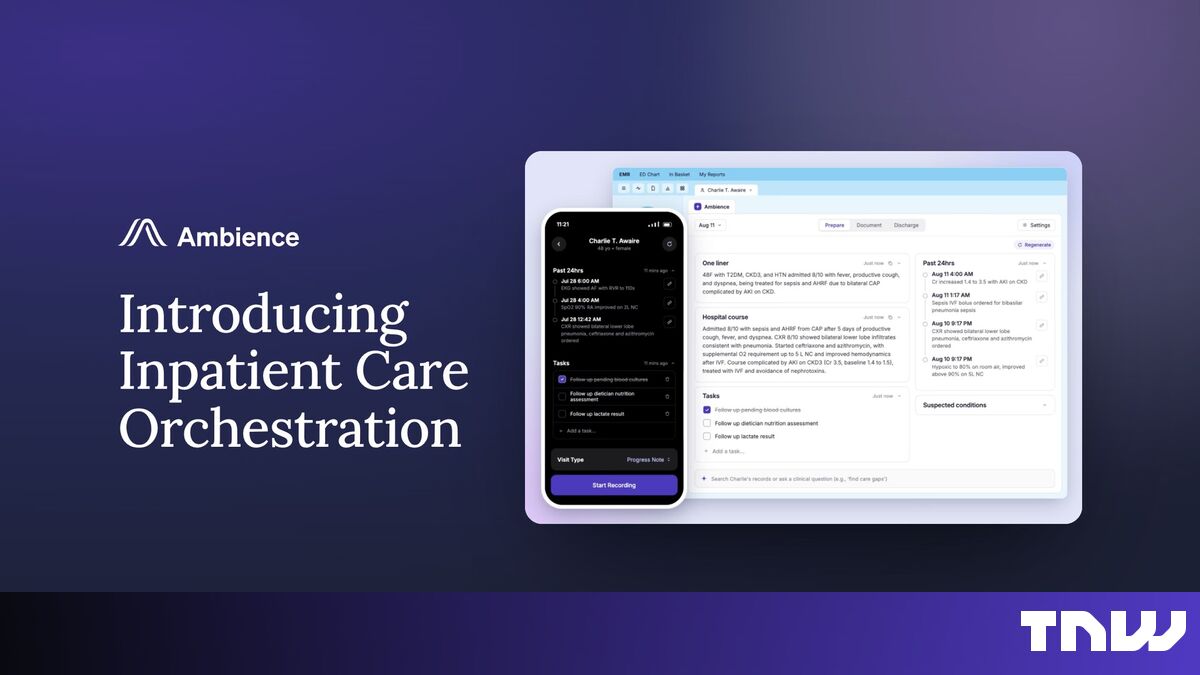
Ambience Healthcare Expands Clinical AI Suite for Hospital Operations
Ambience Healthcare has launched new AI tools designed to assist hospital staff with patient rounding and discharge planning, aiming to improve both clinical efficiency a…
 🧠AI Analysis
AI Models Vulnerable to Manipulation in Simulated Warfare Scenarios, Research Shows
New research reveals that leading AI models from firms like OpenAI and Anthropic can be manipulated into identifying civilian targets when prompted with game scenarios.
 🏢Big Tech
LoanPro Integrates Amazon Bedrock to Automate Loan Servicing Workflows
LoanPro has deployed a multi-agent AI assistant using Amazon Bedrock and Anthropic's Claude models to help lenders manage borrower accounts, resulting in a 15% reduction …
 🏢Big Tech
Google Brings Wallet App to iOS Users Across the United States
Google has expanded the availability of its Wallet application to iOS devices in the U.S., allowing Apple users to store digital passes, tickets, and receipts.
 🧠AI Analysis
AWS Outlines Phased Roadmap for Responsible Agentic AI Governance
Amazon Web Services has published a phased roadmap to help platform and application teams implement responsible AI guardrails for agentic systems.
 🧠AI Analysis
Google updates Gemini settings to separate chat history from AI model training
Google is rolling out new controls for its Gemini app that allow users to maintain their chat history while opting out of data collection for AI model training.