Zenzap positions enterprise AI agents for non-technical teams
Zenzap introduces a collaborative, code-free platform enabling business operators to deploy shared AI agents directly within communication channels.
 🧠AI Analysis
Photo: thenextweb.com
Key points
- Zenzap enables non-technical teams to build AI agents without writing code.
- Agents operate transparently inside shared, multi-user chat channels with cumulative context.
- The platform integrates with over 2,000 workplace applications with strict permission controls and compliance standards.
Enterprise software over the past three years has largely relied on isolated chat widgets and personal productivity copilots. While individuals use these tools to draft emails or summarize documents, the generated context remains trapped in private browser tabs. When complex workflows require cross-functional coordination, these single-player bots frequently stall, failing to deliver durable compound value for organizations.
Shifting deployment from engineers to domain experts
Addressing this structural limitation, Zenzap has introduced a platform designed to let non-technical business operators build and deploy autonomous AI agents without writing code. Rather than routing requests through centralized IT departments or engineering teams, frontline managers can instantly establish tailored agents for specific tasks, such as competitive ad tracking or fulfillment triage.
Collaborative workspaces and operational execution
Zenzap integrates its agents directly into multi-user chat environments rather than isolating them on rigid dashboards. Teams can collaborate alongside an agent using natural language or voice notes, observing execution steps in real time. Because the agent lives within the team stream, context accumulates naturally, allowing institutional memory to be retained across subsequent exchanges.
- No-code deployment: Business operators can build agents without developer assistance.
- Shared channels: Agents operate transparently inside multi-user communication streams.
- Extensive integrations: Connects with over 2,000 workplace applications to execute real-world database updates and workflows.
To address corporate compliance and security requirements, the platform incorporates a three-tier permission model for integrated tools and adheres to frameworks such as SOC 2, HIPAA, GDPR, and ISO 27001. Furthermore, its data policy guarantees that organizational inputs are never utilized to train public foundation models.
Source thenextweb.com — thenextweb.com/news/ai-agents-without-engineers-non-technical-teams ↗
Read next
 🤖AI Models
Google Expands Interactive World-Building with Genie 4 Launch
Google has released its latest world-generation model, Genie 4, to premium AI Ultra subscribers, introducing real-time environment modification and audio integration.
 🏢Big Tech
Microsoft Challenges Rivals on AI Pricing at Ignite Conference
Microsoft is positioning its Copilot AI as the more cost-effective choice for businesses compared to OpenAI and Anthropic, citing a commissioned study to support its clai…
 🚀Startups & Funding
OpenAI CEO Sam Altman Addresses Upcoming Biographical Film
OpenAI CEO Sam Altman commented on the upcoming film 'Artificial,' which portrays his life and the 2023 leadership crisis at the company.
 🌐Work & Society
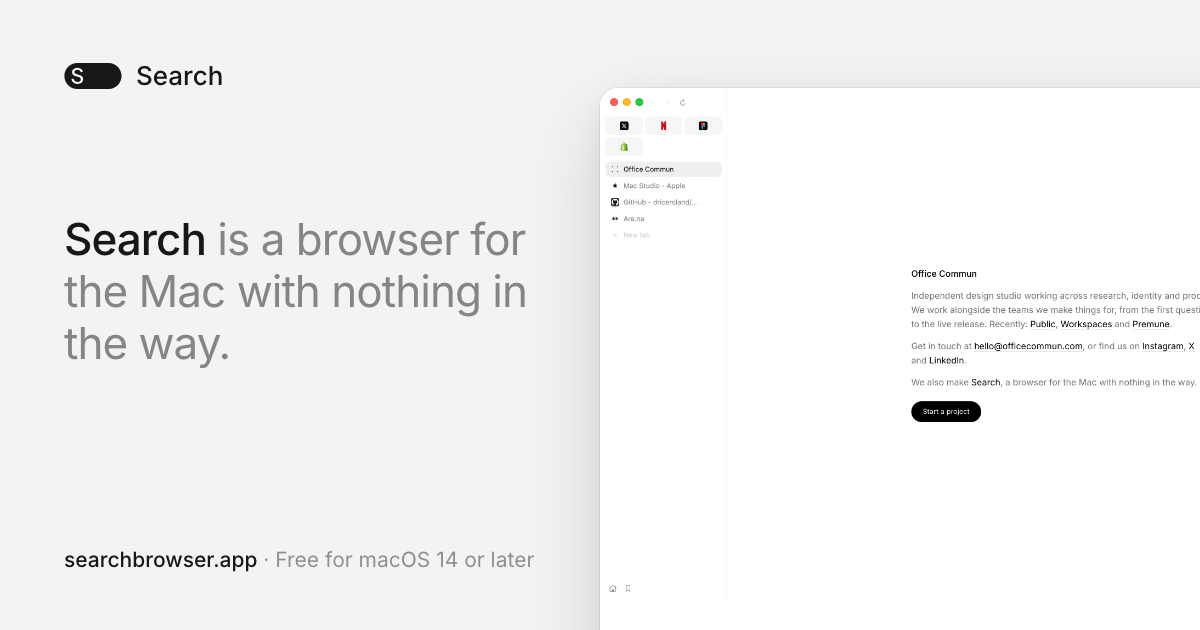
Design Studio Office Commun Launches Minimalist WebKit Browser for macOS
Paris-based design studio Office Commun has released Search, a lightweight, open-source web browser for macOS that prioritizes performance and minimalist design.
 🔌Chips & Hardware
Snapchat Integrates AI Coding Assistants into AR Lens Development
Snapchat has launched the Easy Lens CLI, enabling developers to build augmented reality experiences using AI coding tools like Claude Code and Cursor.
 🚀Startups & Funding
RadixArk Unveils DaisyRose-27B, Focused on Agentic Efficiency
Startup RadixArk has launched DaisyRose-27B, an AI model optimized for long-horizon agent tasks, claiming significant improvements in training efficiency and reasoning ca…