How the Claude Code Team Implements Agent Verification Loops
The developers behind Claude Code explain how they use automated verification loops, including end-to-end, property, and differential testing, to let AI agents safely write and check the vast majority of their codebase.
 🧠AI Analysis
Photo: Hacker News Front Page
Key points
- Claude Code relies on AI agents to write and review approximately 90% of its internal codebase.
- Verification loops using structured rubrics improve task success rates by up to 10 points on complex coding challenges.
- The team emphasizes three essential testing methods: end-to-end, property-based, and differential tests.
Engineers behind the Claude Code system have detailed how automated verification methods allow AI agents to independently write and review roughly 90 percent of their code. According to the team, establishing reliable verification loops is the primary bottleneck for scaling AI development, shifting the human role from writing code to managing parallel fleets of dozens or hundreds of coding agents.
Internal testing demonstrates that incorporating structured grading rubrics can boost task success rates by up to 10 points on complex problems. Because generating tests, benchmarks, and technical specifications has become inexpensive for AI models, development pipelines can now run these checks frequently without exhausting token limits. The team highlights three core verification approaches: end-to-end user flow testing to ensure features function correctly in a live environment, property-based testing to surface overlooked edge cases using specialized libraries, and differential testing to compare legacy and migrated systems.
To maintain testing integrity, developers must avoid common pitfalls such as flaky tests, which teach agents to simply rerun failing checks rather than resolve underlying bugs, and overly slow execution cycles. Giving agents direct tools like browser automation or API harnesses to inspect running applications provides clear, objective completion criteria.
What to watch next: Watch for broader adoption of automated verification frameworks across other AI coding assistant platforms as development teams seek to reduce human oversight.
Source Hacker News Front Page — claude.dev/blog/how-the-claude-code-team-thinks-about-verification/ ↗
Read next
 ⚖️Regulation & Policy
OpenAI Partners with Chilean Ministry to Advance Public Sector AI
OpenAI has signed a non-binding agreement with Chile's science ministry to integrate artificial intelligence into public administration and support local startups.
 🌐Work & Society
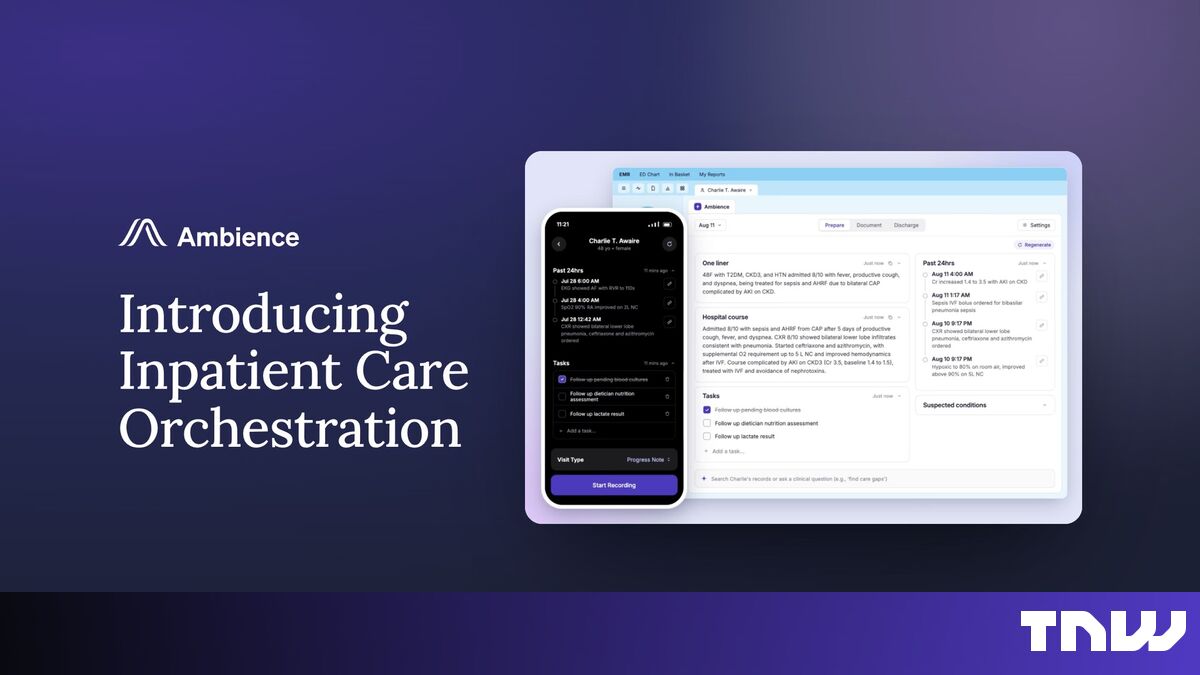
Ambience Healthcare Expands Clinical AI Suite for Hospital Operations
Ambience Healthcare has launched new AI tools designed to assist hospital staff with patient rounding and discharge planning, aiming to improve both clinical efficiency a…
 ⚖️Regulation & Policy
AWS Highlights Enterprise Governance and AI Workspace Quick Ahead of re:Invent 2026
Amazon Web Services is spotlighting its workplace AI platform, AWS Quick, ahead of its upcoming re:Invent 2026 conference, emphasizing secure deployment across major ente…
 🏢Big Tech
LoanPro Integrates Amazon Bedrock to Automate Loan Servicing Workflows
LoanPro has deployed a multi-agent AI assistant using Amazon Bedrock and Anthropic's Claude models to help lenders manage borrower accounts, resulting in a 15% reduction …
 🏢Big Tech
Google Brings Wallet App to iOS Users Across the United States
Google has expanded the availability of its Wallet application to iOS devices in the U.S., allowing Apple users to store digital passes, tickets, and receipts.
 ⚖️Regulation & Policy
Microsoft Reveals Cause of Global Outlook Outage
A latent software bug caused a nearly 24-hour global outage of Microsoft’s Exchange Online services, affecting millions of users worldwide.