Anthropic’s Unconventional Governance Structure Faces Scrutiny Ahead of Public Listing
As AI developer Anthropic prepares for a major public listing, observers are questioning whether its unique governance setup, featuring a financially disinterested trust and founder-controlled voting, provides adequate accountability.
 🧠AI Analysis
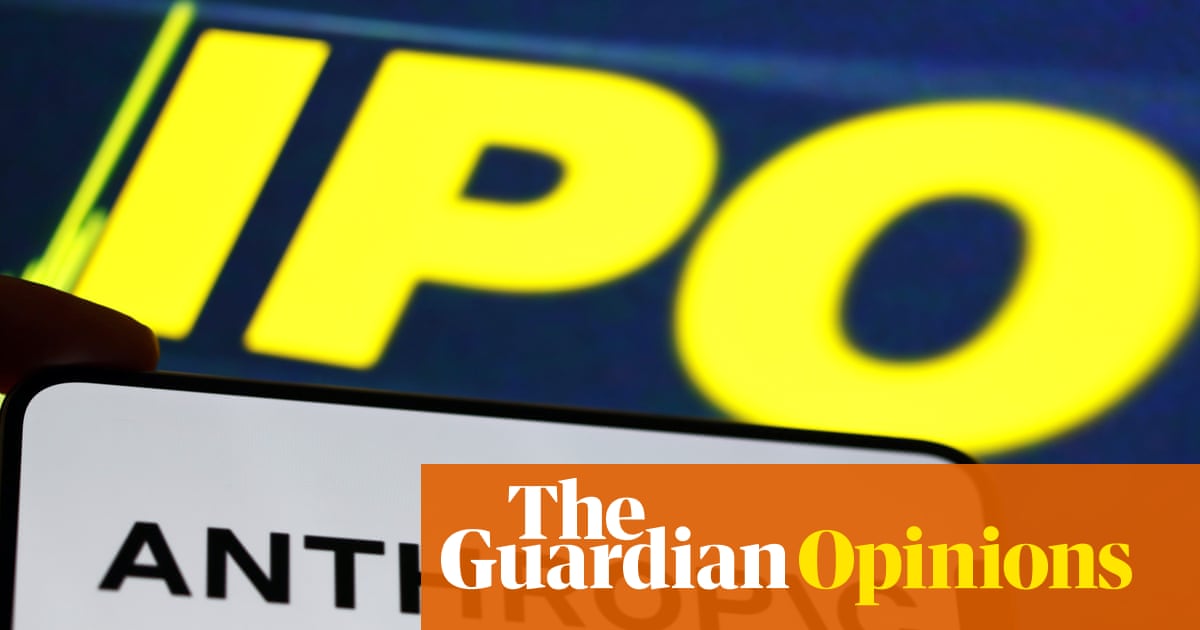
Photo: The Guardian AI
Key points
- Anthropic is utilizing an unconventional corporate governance model involving a Long-Term Benefit Trust.
- Seven founders collectively hold 50.1% of the ultimate voting power to force consensus.
- The setup aims to balance commercial returns with safety risks, though critics question its true accountability.
Corporate governance in the technology sector has historically favored founders, from the dual-class structures of Alphabet and Meta to Snap's zero-voting-rights shares. However, Claude developer Anthropic approaches this dynamic differently as it heads toward a blockbuster public listing. Rather than traditional shareholder primacy, the company relies on a dual center of power divided between its seven founders, who command a collective 50.1% voting block, and the Long-Term Benefit Trust.
The trust, which nominates four of the seven directors, includes prominent figures such as former US Federal Reserve chair Ben Bernanke and is designed to balance profit-making with human welfare. This setup operates under Anthropic's status as a public benefit corporation. Proponents argue that because artificial intelligence development carries potential catastrophic risks, unconventional safety controls are justified beyond simple corporate returns.
Yet, critics question whether this elaborate framework amounts to an untested, inward-looking "trust us" model. Experts point out that agreeing with an overarching safety mission does not guarantee consensus on its execution. For instance, industry figures have already critiqued aspects of the company's approach, raising questions about how real-world disagreements between trustees and founders will be handled when ordinary shareholders lack traditional oversight rights.
Source The Guardian AI — theguardian.com/business/nils-pratley-on-finance/2026/nov/16/anthro… ↗
Read next
 ⚖️Regulation & Policy
OpenAI Partners with Chilean Ministry to Advance Public Sector AI
OpenAI has signed a non-binding agreement with Chile's science ministry to integrate artificial intelligence into public administration and support local startups.
 🌐Work & Society
Ambience Healthcare Expands Clinical AI Suite for Hospital Operations
Ambience Healthcare has launched new AI tools designed to assist hospital staff with patient rounding and discharge planning, aiming to improve both clinical efficiency a…
 ⚖️Regulation & Policy
AWS Highlights Enterprise Governance and AI Workspace Quick Ahead of re:Invent 2026
Amazon Web Services is spotlighting its workplace AI platform, AWS Quick, ahead of its upcoming re:Invent 2026 conference, emphasizing secure deployment across major ente…
 🏢Big Tech
LoanPro Integrates Amazon Bedrock to Automate Loan Servicing Workflows
LoanPro has deployed a multi-agent AI assistant using Amazon Bedrock and Anthropic's Claude models to help lenders manage borrower accounts, resulting in a 15% reduction …
 🏢Big Tech
Google Brings Wallet App to iOS Users Across the United States
Google has expanded the availability of its Wallet application to iOS devices in the U.S., allowing Apple users to store digital passes, tickets, and receipts.
 ⚖️Regulation & Policy
Microsoft Reveals Cause of Global Outlook Outage
A latent software bug caused a nearly 24-hour global outage of Microsoft’s Exchange Online services, affecting millions of users worldwide.