Databricks releases guide for running tabular foundation models without training
Databricks has published open-source code and instructions for executing five tabular foundation models on its GPU infrastructure, allowing businesses to make spreadsheet predictions without task-specific training.
 🧠AI Analysis
Photo: thenextweb.com
Key points
- Databricks published open-source code and a guide for running five tabular foundation models on its GPU runtime.
- Tabular foundation models make predictions from spreadsheet data without needing separate, task-specific training cycles.
- The approach incurs higher compute costs than traditional CPU-based XGBoost models and involves mixed commercial licensing terms.
Databricks has released open-source code and a comprehensive guide detailing how enterprises can run five distinct tabular foundation models on its AI Runtime GPU service. Unlike conventional machine learning methods that require building and retraining separate models for every individual assignment, these advanced systems leverage pretraining on millions of synthetic datasets. They adapt directly to a company's example rows at the exact moment of prediction, streamlining how firms forecast metrics like credit risk, consumer churn, and market demand.
Adoption within the enterprise software sector is gathering momentum. In July, SAP finalized an agreement exceeding one billion euros for Prior Labs, the developer behind the TabPFN model, while H2O.ai introduced its own proprietary system earlier in May. Databricks' new tooling utilizes Nvidia H100 hardware to handle tables containing up to one million rows and 200 columns through its preview GPU platform.
Despite the potential productivity gains, Databricks outlined several practical hurdles regarding deployment. Operating these foundation models on graphics processing units remains more expensive per prediction than traditional XGBoost systems running on standard processors, and memory consumption scales upward as datasets grow larger. Furthermore, licensing terms vary significantly, with options like TabFM and recent versions of TabPFN requiring commercial agreements with their original creators before enterprise use.
Source thenextweb.com — thenextweb.com/news/databricks-tabular-foundation-models-ai-runtime-gui… ↗
Read next
 ⚖️Regulation & Policy
OpenAI Partners with Chilean Ministry to Advance Public Sector AI
OpenAI has signed a non-binding agreement with Chile's science ministry to integrate artificial intelligence into public administration and support local startups.
 🌐Work & Society
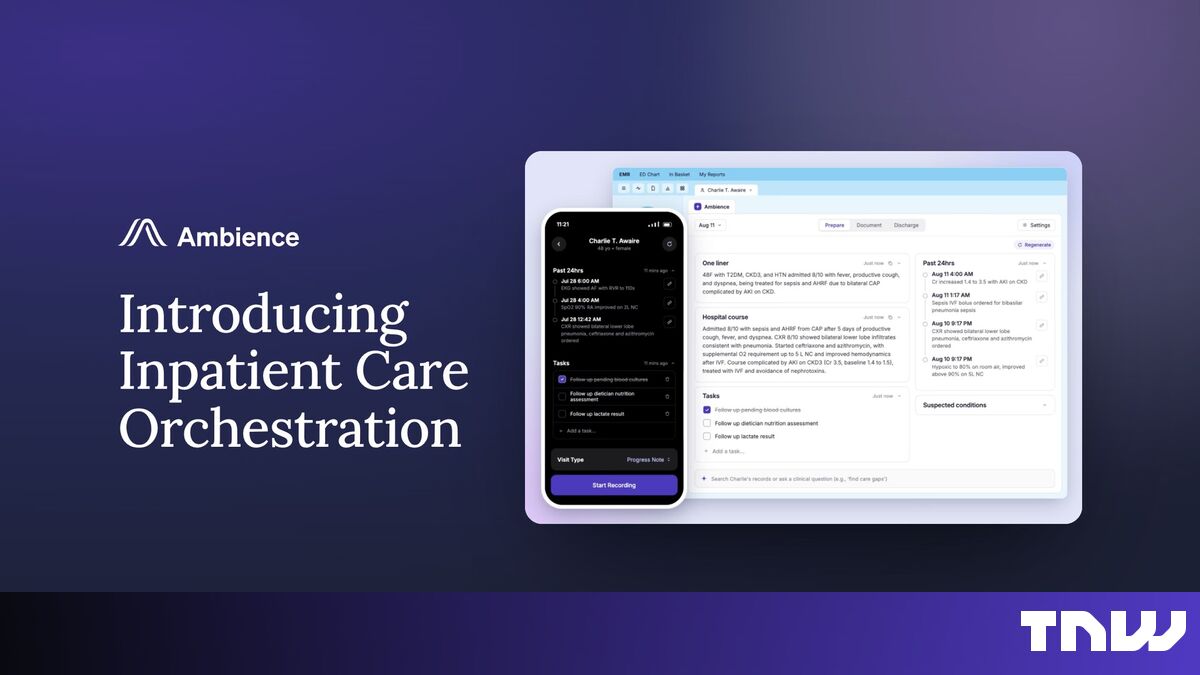
Ambience Healthcare Expands Clinical AI Suite for Hospital Operations
Ambience Healthcare has launched new AI tools designed to assist hospital staff with patient rounding and discharge planning, aiming to improve both clinical efficiency a…
 ⚖️Regulation & Policy
AWS Highlights Enterprise Governance and AI Workspace Quick Ahead of re:Invent 2026
Amazon Web Services is spotlighting its workplace AI platform, AWS Quick, ahead of its upcoming re:Invent 2026 conference, emphasizing secure deployment across major ente…
 🏢Big Tech
LoanPro Integrates Amazon Bedrock to Automate Loan Servicing Workflows
LoanPro has deployed a multi-agent AI assistant using Amazon Bedrock and Anthropic's Claude models to help lenders manage borrower accounts, resulting in a 15% reduction …
 🏢Big Tech
Google Brings Wallet App to iOS Users Across the United States
Google has expanded the availability of its Wallet application to iOS devices in the U.S., allowing Apple users to store digital passes, tickets, and receipts.
 ⚖️Regulation & Policy
Microsoft Reveals Cause of Global Outlook Outage
A latent software bug caused a nearly 24-hour global outage of Microsoft’s Exchange Online services, affecting millions of users worldwide.