China Keeps Top Spot on Supercomputer List as US Pivots Toward AI
China leads the latest Top500 supercomputer ranking with its LineShine system, even as the US shifts its computing priorities toward artificial intelligence workloads.
 🧠AI Analysis
Photo: theregister.com
Key points
- China's LineShine supercomputer claims the top spot on the Top500 list with 2.2 exaFLOPS.
- LineShine is powered entirely by domestic Arm-based LingKun LX2 CPUs despite US export controls.
- The US is prioritizing AI-focused and smaller clusters over traditional benchmark-topping systems.
China has retained the leading position on the biannual Top500 supercomputer list with its LineShine system, achieving 2.2 exaFLOPS on the High Performance Linpack benchmark. Built by the National Supercomputing Centre in Shenzhen, LineShine outpaces the US Department of Energy's El Capitan system by roughly 22 percent. Notably, the machine was constructed despite US export controls restricting access to American graphics processing units, relying instead on 45,360 domestic LingKun LX2 CPUs featuring Arm v9.2 cores.
While LineShine requires a substantial 42.2 megawatts of power, its sheer scale of 22,680 dual-socket nodes propelled China to the top of the rankings for the first time in nearly a decade. Meanwhile, the US approach under the Genesis Mission involves deploying multiple smaller or AI-focused machines rather than a single giant traditional supercomputer. Upcoming American systems like Oak Ridge National Laboratory's Discovery, slated to use AMD Venice processors and Instinct MI430X GPUs, aim to eventually surpass LineShine's raw double-precision performance.
However, many massive US compute clusters—such as large private installations by tech companies—are tailored for AI training and large language models rather than traditional benchmarking. Because commercial AI infrastructure offers more lucrative financial returns and operational utility than running legacy scientific benchmarks, the traditional race for Top500 supremacy has taken a backseat to the commercial demand for artificial intelligence infrastructure.
What to watch next: Monitor upcoming deployments under the US Genesis Mission and how future American exascale systems handle the balance between traditional scientific workloads and modern AI demands.
Source theregister.com — theregister.com/systems/2026/11/16/chinas-grip-on-top500-remains-un… ↗
Read next
 ⚖️Regulation & Policy
Airbnb optimizes coding agent performance using Amazon Bedrock metrics
Airbnb has implemented a cost-per-task evaluation framework to manage the performance and expenses of its internal coding agents hosted on Amazon Bedrock.
 🔌Chips & Hardware
Anthropic Prepares for Landmark IPO with $1 Trillion Valuation Target
Anthropic is set to become the first publicly traded frontier AI lab, aiming for a valuation exceeding $1 trillion as it enters the public markets.
 🏢Big Tech
Anduril CEO Palmer Luckey Calls for Jensen Huang’s Reinstatement at Nvidia
Anduril CEO Palmer Luckey and other industry leaders are pushing for the return of Jensen Huang to Nvidia, arguing his departure weakens U.S. interests. Meanwhile, Nvidia…
 🌐Work & Society
DC Studios pivots strategy under Skydance leadership
Following Skydance’s acquisition of Warner Bros. Discovery, DC Studios is shifting its cinematic strategy toward high-profile heroes, potentially drawing inspiration from…
 🔌Chips & Hardware
US Tightens Export Controls on AI Chips Amid Smuggling Concerns
The White House has introduced new licensing requirements for overseas data centers to prevent Chinese firms from accessing advanced US AI chips via remote cloud services…
 ⚖️Regulation & Policy
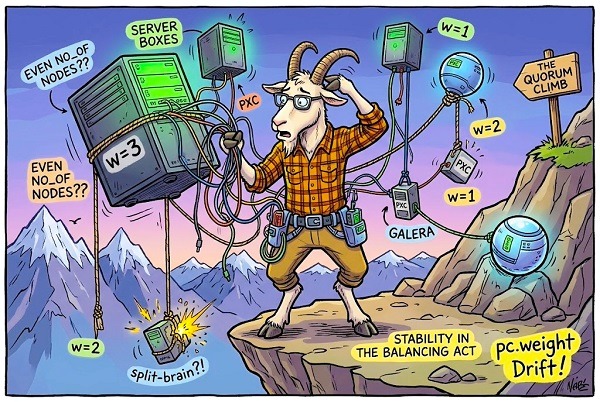
Re-evaluating Galera Node Weights: The Risks of Custom Quorum Configurations
Database administrators are being cautioned against using custom weights to manage even-numbered Galera clusters, as the practice introduces significant risks of instabil…